PRINT MAKING STUDY DAY
WEDNESDAY 29th OCTOBER IN HEMINGFORD ABBOTTS VILLAGE HALL
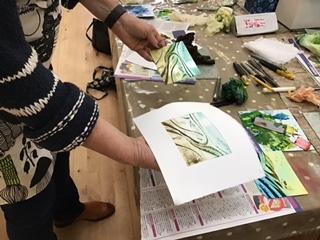
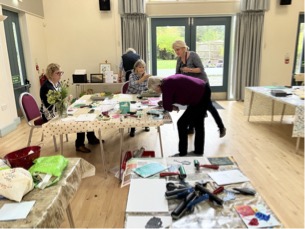
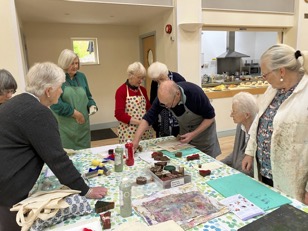
Sherry Rea, an experienced professional printmaker, whose studio is located in Elsworth, led our print-making workshop – first giving an introductory talk on some printmaking techniques, after which participants, under Sherry’s supervision and guidance, were able to try out those different techniques using skills from basic ‘entry level’ to more advanced, producing leaf and flower prints, lino prints, wood block prints, and for the really adventurous – etching. All materials were provided, and members left happily at the end of the day with decorated tote bags, pencil cases and cards, many with a Christmas theme .
SPECIAL INTEREST DAY ON COSTUME AND COSTUME JEWELLERY
WEDNESDAY 30TH OCTOBER 2024
HEMINGFORD ABBOTTS VILLAGE HALL
You will remember Andrew Prince, who opened our 2023/24 lecture programme with his talk on the collections of Catherine the Great, including her dazzling jewels. He has now become a popular lecturer on both jewellery history and fashion and has lectured many times at the V & A, Christies’ Auction House, The Jewellery Historians Society, and to many museums in the USA.
In 2002, the Victoria and Albert Museum commissioned a collection of jewels to accompany their ‘Tiaras, Past and Present’ exhibition – one of their most popular exhibits, which resulted in film work for Andrew.
In 2005, he was asked to make tiaras and jewellery for ‘Mrs Henderson Presents’, starring Judi Dench, and in 2009, pieces for ‘The Young Victoria’, starring Emily Blunt.
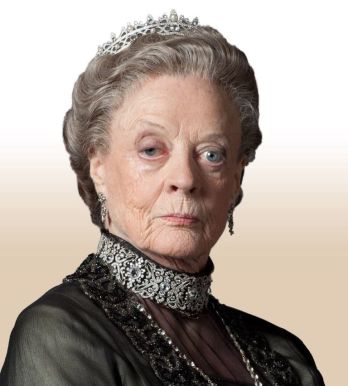
In 2012 Andrew was contacted by Caroline McCall, the costume designer for ‘Downton Abbey’, and asked to supply a large collection of jewellery for the third and fourth series, to be worn by Dame Maggie Smith, Elizabeth McGovern, Michelle Dockery, Lily James and the supporting cast.
Andrew gave the most informative and entertaining talk on the history of jewellery from the late 19th century to the present day, and its relationship to the costume of the time and brought along many of the exquisite jewels which he made for the film.
In the afternoon.
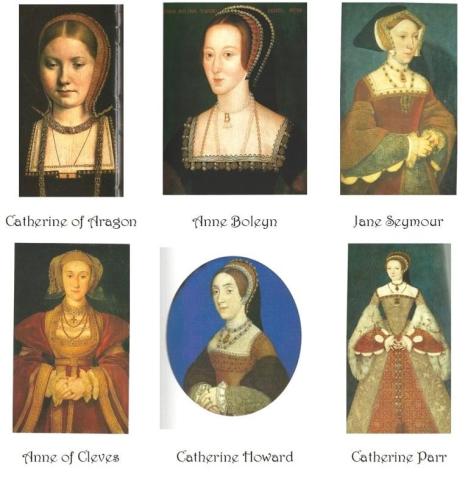
Six into One Will Go
Frances Saltmarsh had long been taking dress-making commissions and costume construction for amateur dramatic productions, when a friend asked her to make a Tudor costume for her various performances.
She wanted one basic dress for the six wives of Henry VIII, but it needed to be made distinctive for each Queen, with the use of different petticoats, sleeves, necklines and head-dresses. However, Frances’ contribution didn’t stop with the costumes; she was asked to talk about the historical research involved, and the precise construction of the garments – and so began a new career. In fact, she soon took over the whole presentation, giving her own version of the history of costume – how she sourced the fabrics and construction of Tudor dress – and researched the life at court and the history of Henry VIII’s six wives.
Using a dressmaker’s dummy, Frances displayed that original dress with appropriate adaptations for each Queen, interspersed with the history of each.
How to Get from There to Here And How Long We Have Been Doing That
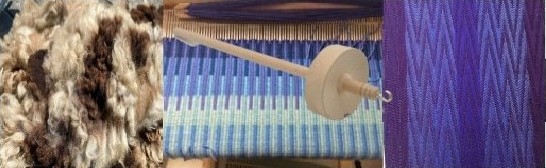
On Wednesday 1st February 2024 some of our members met at Hemingford Village Hall to discover just how we get from a fleece, cocoon or plant fibre to a beautiful piece of cloth and intriguingly how we have been doing that for thousands of years. There was a fascinating talk by Sue Wallis in the morning, and in the afternoon, a demonstration by Jacqui Fuller of all the processes from fleece to weaving. There were so many examples of beautiful fabrics they had created – and then opportunities for all of us to discover for ourselves just how difficult it is to spin and weave.
An appreciative response from one of the group – “Just a quick note to thank you for the most enjoyable textile day. I really enjoyed the speakers and the practical ‘have a go’ session – and the simply delicious lunch.”
Sue has suggested that we might like to make a visit to Warners Silk Mill in Braintree, where silk fabrics were created for the Coronation in 1953.
PORTRAYING YOURSELF
Study day on May 11th to explore the ways women have portrayed themselves in art.
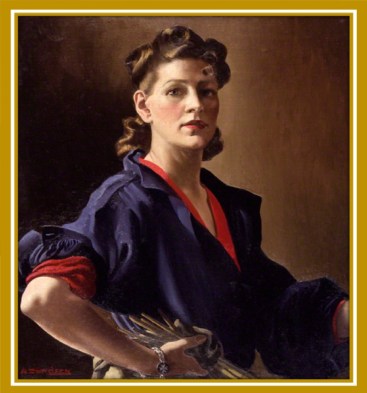
Arrestingly, Carole began her lecture by asking us to think back to our morning routine: “What made you choose your clothes? How did you want to present yourselves?” These questions were designed to make us reflect on the way artists, especially female artists, have presented themselves and how they might have been affected by their ‘audience’.
We all know the social constraints and prejudices that have barred women from education and self- expression for centuries, but who dared to present themselves and how was a path made for women to be acknowledged as artists? It was fascinating to think about the very earliest of examples of women’s portraiture. The first acknowledged piece dates from 1453. In Renaissance Italy, Maria Ormani, an Augustinian nun from an elite Florentine family, finished the page she had created in the illuminated manuscript of a breviary, with a small self-portrait at the bottom of the page framed in decorative scrolls with the words ‘Maria scripsit’ to lay claim to her artwork. This now seems an act of brave self-confidence. It would not have been possible without her wealthy connections.
A recent exhibition at The National Gallery brought us the work of the seventeenth century artist, Artemisia Gentileschi. Not only was she a prodigiously talented painter, but she also used her artwork to challenge the predatory nature of males, drawing on her own traumatic experience. Daringly in ‘Susannah and the Elders’ she portrays the men as lecherous oglers on female beauty.
Without formal education ,how did the trail blazers manage to develop their talent? Artemisia’s father was a painter and she studied in his studio. For many years family connections were the only way for females artists to establish themselves. Finally, in the nineteenth century women were allowed to attend art courses. Even then, nude figure painting was not permitted, and female students were segregated from males. With this atmosphere of repression and prudishness, it is remarkable that we have any female painters of note. However, better education for women and casting off the shackles of domesticity have allowed women’s art to flourish. Self-portraiture, Carole showed us, was often a means of displaying the artist’s skill and claiming, as Maria Ormani, the right to self-advertisement. Women in the 20th and 21st centuries have built on the brave pioneers of the past.
In recent years, female artists have continued to paint not just decoratively, but politically as well, keen to present intimate female concerns to a public and challenge the audience. Freda Kahlo and Tracey Emin have boldly exhibited their very personal experiences in bright colours and shocking detail, following on from the example shown by Artemisia.
Members of the committee contributed dishes for a delicious lunch, after which we were invited to engage in some artwork ourselves. We all commented on the deep, contented hush that fell on the room as people set to work with pencil, paper or iPad to create a portrait or self-portrait.
What a good day we had! Huge thanks to Carole for suggesting the topic and sharing her research in such a well-structured and fascinating lecture.
Claire Sarkies
Please note that we accept no responsibility for the content of any websites that are not under our direct control.
 The Arts Society, Huntingdonshire